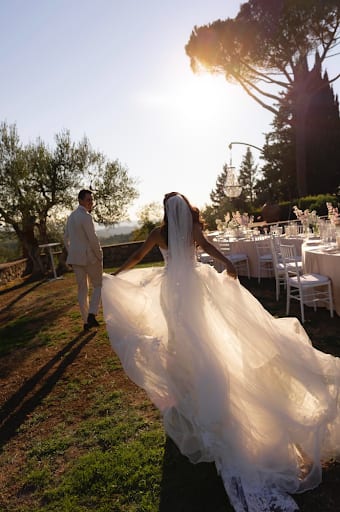
How to communicate with destination wedding guests

Destination weddings are magical - but keeping 50, 75, or 150 guests informed across time zones, languages and logistics is a full-time job. Here's everything you need to know about guest communication, from the first save-the-date to the morning after.

Last updated: April 2026

Why destination weddings need a communication plan

A local wedding is straightforward: guests drive to the venue, attend and drive home. A destination wedding asks guests to book flights, reserve hotels, coordinate ground transportation, navigate a foreign country, manage payments for group activities and figure out a multi-day schedule - all while you're busy planning the event itself.

Without a clear communication plan, you'll spend your engagement fielding the same questions over and over: "What airport should I fly into?" "Is there a shuttle from the hotel?" "When do I need to pay for the excursion?" "Can I bring my kids to the welcome dinner?"

The couples who enjoy their destination wedding the most are the ones who set up systems to handle these questions - so they can focus on each other instead of their inbox.

The destination wedding communication timeline

12-8 months before: the save-the-date

Destination weddings need earlier save-the-dates than local ones. Guests need time to request time off, budget for travel and arrange childcare or pet care. Your save-the-date should include:

8-6 months before: the full invitation

This is where destination weddings diverge from traditional ones. Your invitation package needs to cover:

That's a lot of information for a paper invitation. Most couples create a wedding website to hold the details and point guests there.

4-2 months before: the logistics push

This is when guest questions peak. Flights are being booked, rooms are being assigned and the reality of traveling abroad sets in. You'll need to communicate:

Pro tip: This is the phase where you'll get the most repeated questions. If five guests ask about the shuttle, twenty more are wondering the same thing. Having a way to broadcast updates to everyone at once saves hours.

2 weeks before: final details

The final push. Confirm arrival times, share the detailed day-of schedule, send any last payment reminders and make sure everyone knows how to reach you (or your planner) in case of travel disruptions.

Day-of and during: real-time communication

This is where most communication plans fall apart. You're getting your hair done and a guest texts "what time is the shuttle?" You're walking down the aisle and someone can't find the venue. You're at your reception and a guest needs the Wi-Fi password.

You need a way to handle real-time guest questions that doesn't involve you or your wedding party pulling out their phones.

Communication channels: pros and cons

Email

Good for long-form information early on. Bad for time-sensitive updates. Emails get buried, filtered to spam, or simply ignored. Open rates for personal emails hover around 40-60% - which means nearly half your guests might miss critical logistics.

Wedding website

Essential for hosting detailed information. But it's passive - guests have to remember to check it and they won't. A wedding website is a reference document, not a communication channel.

Group chats (WhatsApp, iMessage)

The most common solution and the most chaotic. Group chats devolve quickly: important messages get buried under memes, not everyone uses the same app and you can't send personalized information (like individual payment links or room assignments) in a group setting. Plus, some guests find large group chats intrusive.

SMS

The highest open rate of any channel - 98% of text messages are read within 3 minutes. Every phone on earth can receive SMS. No app to download, no account to create. The limitation is that SMS is traditionally one-to-one, which makes it hard to scale without help.

A dedicated concierge

The premium solution. A real person (or AI) who handles all guest communication through a single channel. Guests text one number and get instant answers about schedules, rooms, payments and logistics. The couple never has to be involved.

The ideal setup: Use email for initial invitations, a wedding website for reference details and SMS for everything time-sensitive and personal. If you can automate the SMS channel, you get the best of all worlds without the workload.

The 10 questions every destination wedding guest will ask

No matter how thorough your website or invitation, these questions will come up repeatedly:

  1. "What airport should I fly into?"
  2. "Is there a shuttle from the airport?"
  3. "What's the schedule for [day]?"
  4. "What should I wear to the welcome dinner?"
  5. "How do I pay for the excursion?"
  6. "What room am I in?"
  7. "Is there Wi-Fi?"
  8. "What time is checkout?"
  9. "Can I bring a plus-one?"
  10. "Where exactly is the ceremony?"

If you have 75 guests and each asks 3 of these, that's 225 messages you need to respond to. Multiply by the back-and-forth of clarification and you're looking at 500+ messages over the course of your engagement.

How to reduce your communication workload

1. Centralize everything

Don't split information across email threads, group chats and your wedding website. Pick one channel as the "source of truth" and direct all questions there.

2. Be proactive, not reactive

Don't wait for guests to ask. Send broadcast updates at key milestones: when rooms are assigned, when payment deadlines approach, when the shuttle schedule is finalized. Every proactive message prevents ten reactive ones.

3. Personalize where it matters

Payment links should go to individuals, not groups. Room assignments are personal. Shuttle times depend on arrival flights. Generic broadcasts handle 60% of communication; personalized messages handle the rest.

4. Automate the repeatable

If twenty guests ask the same question, the answer should be automated. FAQ pages help, but guests don't read them. An automated system that can answer "what time is the shuttle?" instantly - in the guest's language - saves hours of manual replies.

5. Delegate

Whether it's a wedding planner, a bridesmaid, or a technology solution - don't try to be the sole point of contact for 75 guests while also planning a wedding. Your job is to get married. Someone (or something) else should handle the logistics questions.

Let Vino handle all of this

Vino is an SMS concierge for your wedding. Your guests text a number and get instant, personal answers - in 20+ languages. You set it up once and never worry about guest communication again.

Get started

More wedding planning guides

← Back to Vino